
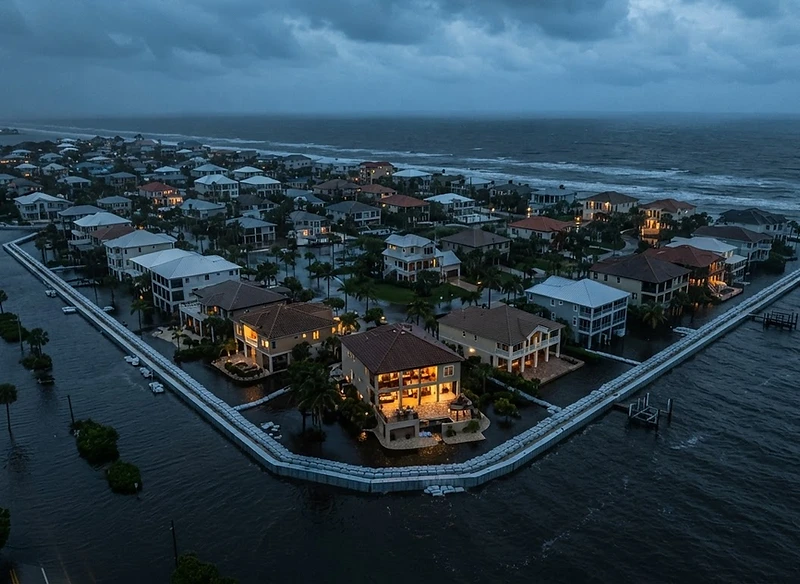
Florida leads the United States in flood exposure, with more than 13 million residents living in areas vulnerable to storm surge and coastal flooding. For homeowners across the state, the question is no longer if a flood event will occur. It is when, and whether the property will survive it. Permanent, engineered flood barrier systems offer a structural solution that sandbags, inflatable tubes, and emergency response crews simply cannot match.
Why Permanent Flood Barriers Outperform Temporary Solutions
Traditional flood defenses — sandbags, removable panels stored in a garage, inflatable barriers — all share a critical failure point: they require human deployment under time pressure. When a hurricane is hours from landfall, evacuation orders are issued, roads are jammed, and homeowners are often hundreds of miles away. A permanent flood barrier system eliminates this variable entirely. Fortress Flood Protection barriers use permanently mounted tracks and pre-fitted panels that deploy in under ten minutes, with no tools and no specialist crew required. The system is part of the home, not an accessory to be found in a panic.
Engineering matters. A properly designed flood barrier must resist not only the static pressure of standing water but the dynamic impact of storm surge: wave action carrying debris at significant velocity. Fortress Flood Protection barrier systems are tested to 12 PSI hydrostatic pressure, exceeding Florida Building Code requirements for Category 5 hurricane resistance. The marine-grade 6061 aluminum construction and EPDM interlocking seals are rated for 50+ years of saltwater and UV exposure, meaning the barrier you install today will still perform when a storm hits decades from now.
Understanding FEMA Flood Zones and Your Risk Profile
Every Florida property is assigned a FEMA flood zone designation that reflects its statistical risk of flooding. Zone AE represents high-risk areas with a 1% annual chance of flooding, the so-called "100-year floodplain." Zone VE marks coastal high-risk areas subject to additional storm wave hazards, requiring the most robust barrier engineering. Even Zone X properties, designated as moderate or low risk, are not immune: over 20% of National Flood Insurance Program claims come from outside high-risk zones. A professional flood risk assessment identifies your property's specific zone, elevation, and vulnerability points, then matches a barrier system to that exact profile.
The Installation Process: What to Expect
A permanent flood barrier installation begins with a property assessment by licensed engineers, who evaluate every opening — doors, windows, garage entries, ventilation ports — against the property's flood risk profile. Barrier tracks are then permanently mounted to the structure using corrosion-resistant hardware, and custom-fit panels are fabricated to match each opening precisely. The entire process typically requires one to three days depending on property size, with no structural modifications to the home itself. Once installed, the system is ready for instant deployment and comes with a lifetime structural warranty. Many Florida insurance carriers offer premium reductions for certified flood barrier installations, meaning the system can pay for itself over time while providing the protection that matters most.